For years, Boston Dynamics’ robots have captivated audiences with their uncanny agility, often dancing, jumping, or traversing impossible terrain in carefully orchestrated viral videos. These spectacles built a brand, but the underlying message always felt distant from gritty industrial reality. Now, the company shifts gears, pushing its electric humanoid, Atlas, from YouTube sensation to factory floor workhorse. Their new Atlas-V2 Autonomous Navigation SDK isn’t about flips and tricks; it’s about cold, hard, automated efficiency. It’s about giving a bipedal machine the keys to the industrial kingdom, a complex, multi-floor labyrinth where human workers currently tread.
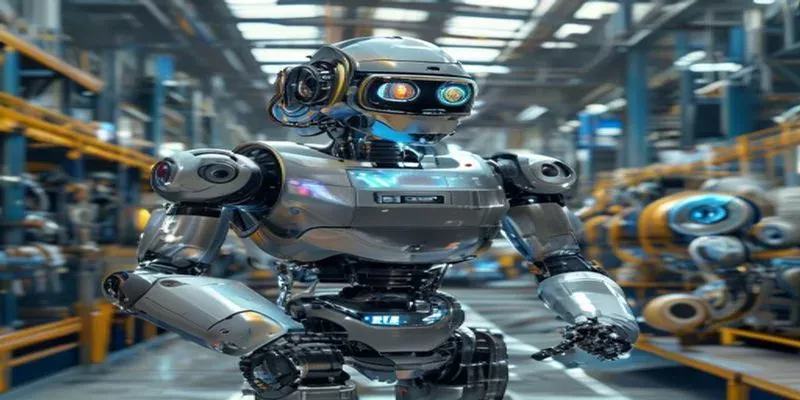
This isn’t just another software update. It’s Boston Dynamics’ clearest signal yet: the future of industrial automation includes humanoids, and they’re not just for show anymore. The SDK equips enterprise developers with tools to program Atlas for intricate, autonomous navigation paths, making the robot a potential surveyor, inspector, and data collector in dynamic, often hazardous, industrial environments. The era of the walking, talking (well, moving) robot on the factory floor is no longer a distant sci-fi fantasy; it’s a software package you can download.
The Factory Floor’s New Overlord: Atlas’s Calculated Ascent
Imagine a factory floor, vast and intricate, humming with machinery, crisscrossed by conveyor belts, and dotted with obstacles. For a human, navigating this environment is second nature. For a robot, it’s a computational nightmare. Until recently, deploying complex robots like Atlas in such spaces required extensive, often prohibitive, manual programming and constant human oversight. Boston Dynamics aims to change that calculus.
With the Atlas-V2 Autonomous Navigation SDK, the company targets a clear pain point for industrial operators: the need for consistent, repeatable inspections and data collection in environments too dangerous, too repetitive, or simply too vast for human personnel to manage efficiently. The SDK provides the framework for enterprise developers to dictate where Atlas goes, how it gets there, and what it does along the way. This isn’t just about moving from point A to point B; it’s about understanding and operating within a complex, ever-changing industrial landscape.
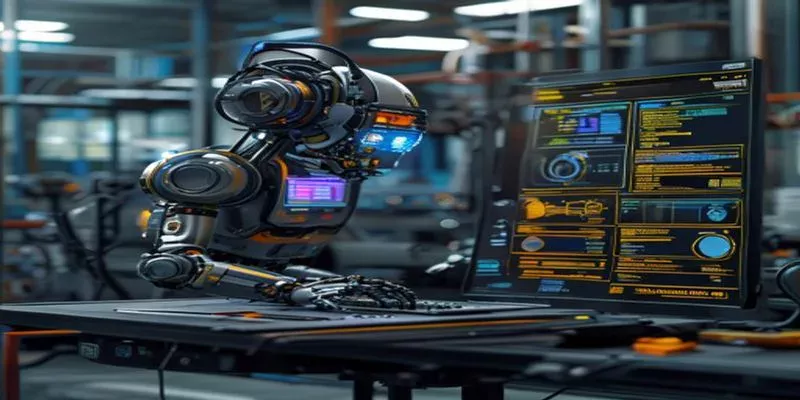
The Atlas robot itself, an evolution of years of research, represents a significant engineering feat. Its electric actuators offer quiet, powerful movement, a stark contrast to some of its hydraulic predecessors. This makes it more suitable for indoor, human-adjacent environments. The SDK leverages these physical capabilities, translating sophisticated movement into practical industrial applications. It’s a pragmatic move, pivoting from abstract research to tangible, commercial utility. The goal is to make Atlas a tool, not just a marvel.
Beyond the Hype: Atlas SDK’s Industrial Blueprint
The core of the Atlas-V2 SDK lies in its ability to enable sophisticated autonomous navigation. This isn’t trivial. Industrial environments are notoriously chaotic. Equipment moves, personnel shift, and conditions change. A robot needs to perceive, understand, and react to this dynamism in real-time. Boston Dynamics addresses this through a combination of spatial computing and advanced visual-inertial odometry.
The SDK essentially provides a programming layer that allows developers to define missions for Atlas. These missions can involve traversing multiple floors, navigating around unexpected obstacles, and performing specific inspection tasks at designated waypoints. The elegance, or perhaps the cold efficiency, lies in its modularity. Developers can build on top of this foundation, tailoring Atlas’s behavior to specific industrial requirements, from checking valve gauges to scanning for thermal anomalies.
Mapping the Maze: Spatial Computing’s Edge
Spatial computing forms the backbone of Atlas’s navigational intelligence. This technology allows the robot to build and maintain a detailed, three-dimensional understanding of its environment. It’s not just a flat map; it’s a volumetric representation that includes the height, depth, and relative positions of all objects and structures within its operational area. Think of it as giving Atlas an internal architectural blueprint that constantly updates.
This robust spatial model is crucial for multi-floor navigation. Atlas doesn’t just know where the stairs or elevators are; it understands the entire vertical layout of a facility. This capability is particularly valuable in multi-story factories, power plants, or warehouses where inspections often require moving between levels. The SDK provides tools to help Atlas process sensor data – likely from LiDAR, depth cameras, and other onboard sensors – to construct and refine these spatial maps. This allows for path planning that accounts for elevation changes, ramps, and stairwells, transforming a complex industrial facility into a navigable domain for the robot. (Source: Boston Dynamics News Release)
Eyes on the Prize: Real-time Odometry in Action
While spatial computing provides the static map, real-time visual-inertial odometry (VIO) gives Atlas its dynamic awareness. VIO is a sophisticated technique that combines data from cameras (visual) and inertial measurement units (inertial) to estimate the robot’s position and orientation in space. Essentially, Atlas uses its “eyes” to track features in its environment and its “inner ear” (IMU) to sense its own motion, fusing these data streams to pinpoint its exact location and movement path with high precision.
This real-time capability is paramount in dynamic industrial settings. Obstacles appear, people move, forklifts operate. Atlas can detect these changes and adapt its path instantaneously, avoiding collisions and maintaining its mission objective. The SDK likely exposes interfaces for developers to fine-tune these perception parameters, allowing for robust performance even in challenging lighting conditions or environments with repetitive visual textures. The promise is clear: Atlas won’t just follow a pre-programmed line; it will intelligently navigate a living, breathing factory, making decisions on the fly. (Source: Boston Dynamics GitHub)
From Viral Stunts to Industrial Workhorse: Boston Dynamics’ Pivot
Boston Dynamics has long been synonymous with groundbreaking, often viral, robotics demonstrations. From BigDog’s early, unsettling gait to Spot’s agile dances and Atlas’s parkour exploits, the company has consistently pushed the boundaries of what legged robots can achieve. However, the path from research marvel to commercial product has been a long, sometimes winding one.
Spot, their quadruped robot, was the first significant commercial foray, finding niches in inspection, security, and remote monitoring. Atlas, with its bipedal form, presents a different set of challenges and opportunities. Its human-like form factor is designed to navigate human-centric environments, opening doors (literally and figuratively) in facilities built for people. This SDK marks a crucial step in making Atlas a viable, deployable tool rather than a laboratory curiosity.

This strategic shift reflects a broader trend in robotics: the move from general-purpose, proof-of-concept machines to specialized, application-driven solutions. By releasing an SDK, Boston Dynamics empowers a larger ecosystem of developers and integrators. This decentralizes the development effort, allowing myriad industries to explore tailored applications for Atlas without requiring Boston Dynamics’ direct involvement in every bespoke solution. It’s a classic platform strategy: provide the core technology, and let others build the specific use cases. This approach acknowledges the vast diversity of industrial needs and the impracticality of one company developing every solution.
The Human Element: Jobs, Safety, and the Automated Future
The introduction of highly capable autonomous robots like Atlas inevitably raises questions about the human workforce. While Boston Dynamics and proponents of automation often emphasize robots augmenting human capabilities or taking on dangerous tasks, the underlying reality is often more complex. Automated inspection robots can reduce the need for humans in hazardous zones, yes, but they also streamline processes, potentially reducing overall labor requirements.
Consider the role of an industrial inspector. This job often involves repetitive routes, meticulous data collection, and exposure to loud machinery or potentially toxic environments. Atlas, with its SDK, is now capable of performing these tasks with unwavering consistency, 24/7, without complaint. This doesn’t necessarily mean immediate job displacement for every human inspector, but it certainly shifts the nature of the work. Human workers might transition to supervising robot fleets, analyzing the data collected by Atlas, or maintaining the robots themselves. The conversation moves from if robots will impact jobs to how jobs will transform.
Safety is another critical factor. A robot that can navigate complex, dynamic environments reduces the risk of human injury in dangerous areas. Atlas’s advanced perception and obstacle avoidance capabilities are designed to prevent collisions, not just with static objects, but with moving personnel and equipment. This emphasis on safe operation is paramount for widespread industrial adoption, as any incident could severely hamper public and corporate trust in autonomous systems. The challenge lies in ensuring these systems are truly fail-safe and predictable in unpredictable environments.
The Unspoken Costs: Integration and Maintenance
While the Atlas-V2 SDK offers compelling capabilities, the path to widespread adoption isn’t without its hurdles. The initial investment in a cutting-edge humanoid robot like Atlas will be substantial. Beyond the hardware cost, there’s the significant expense of integration. Companies won’t simply plug in Atlas and let it roam free. They’ll need to invest in developer talent to leverage the SDK, adapt it to their specific facility layouts, and integrate the robot’s data streams into existing enterprise systems.

Maintenance is another critical consideration. High-performance robotics, especially those designed for dynamic movement, require regular upkeep, calibration, and potentially specialized repairs. Downtime on a factory floor is expensive, and ensuring Atlas’s continuous operation will demand robust support infrastructure and skilled technicians. Boston Dynamics will need to provide comprehensive support and training to its enterprise clients to ensure successful deployments.
Furthermore, the learning curve for developers utilizing a new SDK for a complex humanoid robot cannot be underestimated. While the SDK aims to simplify programming, working with advanced robotics still requires specialized knowledge in areas like kinematics, sensor fusion, and control systems. This implies that only larger enterprises with dedicated R&D budgets and skilled engineering teams might be the early adopters, at least until the technology matures and becomes more accessible.
Key Takeaways
- Boston Dynamics’ Atlas-V2 Autonomous Navigation SDK enables complex, multi-floor navigation for its electric humanoid robot in industrial settings.
- The SDK leverages spatial computing for detailed 3D environment mapping and real-time visual-inertial odometry for dynamic obstacle avoidance and precise localization.
- This release signifies a strategic pivot for Boston Dynamics, moving Atlas from a research platform to a commercial tool for industrial inspection and data collection.
- Enterprise developers are empowered to program custom missions, tailoring Atlas’s capabilities to specific factory floor requirements.
- The move has profound implications for industrial efficiency, worker safety, and the transformation of human labor in manufacturing and logistics.
- Significant integration costs, maintenance requirements, and the need for specialized developer talent remain key challenges for widespread adoption.
FAQ
Q1: What is the primary purpose of the Atlas-V2 Autonomous Navigation SDK?
A1: The SDK allows enterprise developers to program Boston Dynamics’ Atlas robot for autonomous, multi-floor navigation and inspection tasks within complex industrial environments, enabling it to avoid obstacles and collect data efficiently.
Q2: How does Atlas navigate complex industrial environments with the SDK?
A2: Atlas utilizes advanced spatial computing to build a 3D model of its surroundings and real-time visual-inertial odometry (VIO) to precisely track its position, orientation, and dynamically avoid obstacles.
Q3: Is the Atlas robot fully autonomous with this SDK?
A3: The SDK provides the tools for developers to enable highly autonomous navigation and task execution. However, initial setup, mission programming, and oversight by human operators are still required.
Q4: What kind of tasks can Atlas perform using this SDK?
A4: The SDK is designed to facilitate automated inspection tasks, such as monitoring equipment, scanning for anomalies, and collecting data along predefined or dynamically adjusted paths in industrial facilities.
Q5: How does this SDK impact human jobs in industrial settings?
A5: While the SDK aims to automate repetitive and hazardous tasks, potentially reducing the need for human presence in certain roles, it also creates new opportunities for human workers in robot supervision, data analysis, and maintenance.
The Atlas-V2 SDK isn’t just a technical achievement; it’s a statement of intent. Boston Dynamics is moving past the viral videos, past the academic papers, and squarely into the realm of industrial utility. The factory floor, with its grime, its noise, and its endless demand for efficiency, is about to meet a new kind of worker. Whether this new era ushers in unprecedented productivity or simply shifts the burden of labor remains to be seen. What’s clear is that the robots are learning their way around, and industry leaders now hold the map. The question isn’t whether they’ll deploy them, but how quickly. Developers interested in exploring the SDK can find more details on the Boston Dynamics GitHub page.