
Silicon Valley’s current obsession with artificial intelligence has a physical bottleneck: copper, fiber-optic cables, and millions of tiny, fractured pieces of silicon. Tech giants are building football-field-sized data centers, stringing together tens of thousands of Nvidia GPUs with miles of networking cables. It is a fragile, expensive architecture where chips spend significant time waiting for data to travel across a warehouse.
Cerebras Systems offers a radical shortcut. Instead of cutting silicon wafers into tiny chips and trying to glue them back together on green circuit boards, Cerebras keeps the entire wafer intact. The company’s flagship processor, the Wafer-Scale Engine 3 (WSE-3), is a dinner-plate-sized processor designed specifically to train and run next-generation AI models.
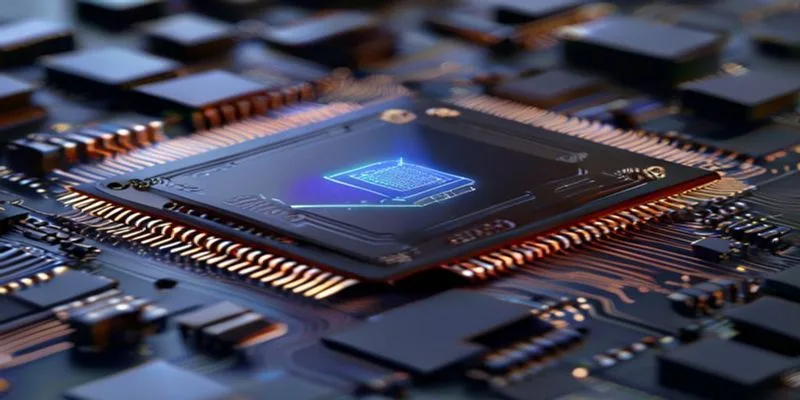
By keeping everything on a single piece of silicon, Cerebras bypasses the physical limits of traditional networking. The WSE-3 represents a massive escalation in the hardware arms race, delivering a major performance boost over its predecessor and positioning itself as the premier alternative to traditional GPU clusters. This hardware capability is backed by massive commercial momentum: in May 2026, Cerebras went public (Ticker: CBRS), raising $3.5 billion at a $26.6 billion valuation, following a historic $10 billion deal in January 2026 to deliver 750 megawatts of computing power to OpenAI through 2028.
The Dinner Plate Silicon: Inside Cerebras’s Bid to Kill the GPU Cluster
To understand the WSE-3, you must first understand the fundamental limitations of modern chip manufacturing. Standard microprocessors are built on 300-millimeter silicon wafers. Manufacturers print hundreds of chips onto a single wafer, cut them up into tiny squares, and discard the defective ones.
Nvidia’s top-tier GPUs are made this way. To train a massive model like Google Unveils Gemini Ultra 2: A New Era for AI Reasoning and Multimodal Understanding, engineers must link thousands of these tiny squares together using high-speed network switches. The resulting cluster is a power-hungry beast where data bottlenecks are common.
Cerebras does not cut the wafer. The WSE-3 is a single, giant square of silicon carved from a standard 300mm wafer. It is the largest single chip ever built for AI training and inference. Because the entire processor sits on a single piece of silicon, communication between cores happens at speed-of-light velocities across the chip’s internal routing, rather than slowing down to pass through copper wires or optical transceivers.
| Metric | Cerebras WSE-3 | Traditional GPU Cluster (Equivalent) |
|---|---|---|
| Chip Count | 1 (Wafer-Scale) | Thousands of discrete GPUs |
| Core Count | 900,000 AI-optimized cores | Millions of smaller cores spread across nodes |
| On-Chip Memory | 44 Gigabytes of SRAM | Megabytes per GPU (HBM is off-chip/stacked) |
| Interconnect Bottleneck | Near-zero (on-wafer routing) | High latency (Infiniband/Ethernet cables) |
| Target Model Size | Up to 120 Trillion Parameters (via Weight Streaming) | Up to 120 Trillion Parameters (requires massive clusters) |
900,000 Cores on a Single Wafer
The sheer scale of the WSE-3 is difficult to comprehend. The single-chip processor boasts 900,000 AI-optimized cores and 4 trillion transistors. These are not general-purpose CPU cores designed to run operating systems or word processors. They are lean, mathematical engines designed to perform the tensor operations that power deep learning.

By packing 900,000 cores onto a single piece of silicon, Cerebras eliminates the latency that plagues multi-GPU setups. In a traditional cluster, when one GPU finishes a calculation, it must wait for its neighbors to catch up before exchanging weights across a slow external network. The WSE-3 does away with this synchronization lag. Every core can talk to its neighbor instantly, allowing neural networks to run at near-perfect efficiency.
The Memory Bottleneck and the 44-Gigabyte Solution
In generative AI, memory bandwidth is just as important as raw computing power. If a processor cannot feed data to its cores fast enough, those cores sit idle. Nvidia solves this by stacking High Bandwidth Memory (HBM) next to its GPU dies. While fast, HBM still requires data to cross a physical gap, creating a bottleneck.
Cerebras bypasses this issue by putting the memory directly inside the cores. The WSE-3 features 44 gigabytes of on-chip SRAM. SRAM is the fastest type of computer memory in existence. By distributing 44GB of this ultra-fast memory across the entire wafer, every single one of the 900,000 cores has dedicated, high-speed access to its own memory pool. The resulting memory bandwidth is measured in petabytes per second—orders of magnitude faster than anything possible with HBM-equipped GPUs. This radical approach to physical scaling mirrors other deep-tech efforts to bypass traditional hardware limits, such as quantum computing developments detailed in The Cold, Hard Truth About IBM’s 1,000-Qubit Breakthrough: Have We Finally Beaten Quantum Noise?.
Weight Streaming: Scaling to 120 Trillion Parameters
Today’s most advanced LLMs are estimated to have over a trillion parameters. Training these models requires months of continuous compute time on clusters of tens of thousands of GPUs. The AI industry is already looking toward the next horizon: models with 10 to 100 trillion parameters. These models aim to achieve true multi-modal reasoning, real-time video generation, and autonomous scientific discovery.
Training a 100-trillion parameter model on a traditional GPU cluster is an engineering nightmare. The physical limits of networking make it difficult to scale clusters past a certain point without experiencing diminishing returns.

To tackle this frontier, Cerebras does not rely on fitting the entire model’s weights onto the wafer’s on-chip memory. Instead, they utilize an architecture called Weight Streaming, a technology introduced in the WSE-2 generation. Weight Streaming stores the model weights externally in a dedicated memory extension technology and streams them onto the wafer-scale engine one layer at a time. This separates compute from memory capacity, allowing a single WSE-3 system to support models with up to 120 trillion parameters without requiring complex code to partition models across thousands of individual chips. The WSE-3 makes a massive cluster look like a single, giant processor to the software, dramatically simplifying the development pipeline.
David vs. the Green Goliath: Can Cerebras Actually Dent Nvidia’s Monopoly?
Despite the impressive technical specs of the WSE-3, Cerebras faces a monumental uphill battle. Nvidia does not just sell chips; it sells an entire ecosystem.
Nvidia’s proprietary CUDA software platform has been the industry standard for AI development for over a decade. Almost every major AI framework, from PyTorch to TensorFlow, is optimized to run on CUDA. Developers are comfortable with it, and companies have invested billions of dollars in building software pipelines around it. This dominance is also drawing closer attention from regulators, as discussed in The Dawn of AI Regulation: Congress Passes the Historic Federal AI Safety and Innovation Act.
Cerebras has built its own software stack, the Cerebras Software Platform (CSp), designed to compile standard PyTorch models directly to the wafer. While Cerebras claims this compiler makes the transition seamless, convincing conservative enterprise buyers to abandon Nvidia’s proven ecosystem is a tough sell.
However, Cerebras is proving its worth in the inference market. Recent independent benchmarks demonstrated Cerebras WSE-3 systems running Llama 4 inference at over 2,500 tokens per second—more than double the speed of Nvidia’s Blackwell architecture. This raw performance advantage, combined with their massive OpenAI partnership, shows that Cerebras is no longer just a research experiment; it is a viable commercial threat.
Furthermore, wafer-scale engineering is incredibly difficult to manufacture. If a standard chip manufacturer makes a mistake on a wafer, they throw away the broken square and sell the rest. If a speck of dust lands on a Cerebras wafer during manufacturing, it could theoretically ruin the entire giant chip.
To combat this, Cerebras builds massive redundancy into the WSE-3. The chip contains extra cores and routing paths. If a defect is detected during testing, the wafer’s internal software simply routes around the broken silicon, ensuring the chip remains fully functional. It is a brilliant piece of engineering, but it keeps manufacturing costs high and yields tight.
Key Takeaways
- Wafer-Scale Dominance: The Cerebras WSE-3 is a massive, single-chip processor carved from an entire 300mm silicon wafer, eliminating the need for complex, high-latency GPU networking.
- Massive Core Count: The chip houses 900,000 AI-optimized cores and 4 trillion transistors on a single piece of silicon.
- Ultra-Fast Memory: With 44 gigabytes of on-chip SRAM, the WSE-3 bypasses the memory bandwidth bottlenecks associated with traditional HBM-equipped GPUs.
- 120-Trillion Parameter Capacity: Using Weight Streaming technology, Cerebras separates compute from memory, allowing native support for ultra-scale neural networks.
- Inference Leadership: Benchmarks show WSE-3 running Llama 4 inference at over 2,500 tokens per second, outpacing Nvidia’s Blackwell architecture.
- Commercial Validation: Backed by a $26.6 billion IPO in May 2026 and a $10 billion OpenAI compute contract, Cerebras is a major player in the AI hardware market.
FAQ
How does the WSE-3 compare to Nvidia’s latest GPUs?
While a single Nvidia GPU is much smaller and cheaper, it requires complex networking to scale. The WSE-3 offers the computing power of a massive GPU cluster on a single, wafer-scale chip, dramatically reducing latency and power distribution bottlenecks. In inference tasks, the WSE-3 has been benchmarked running Llama 4 at over 2,500 tokens per second, outperforming Nvidia’s Blackwell architecture.
What is the advantage of on-chip SRAM over HBM?
SRAM is significantly faster than the High Bandwidth Memory (HBM) used in traditional GPUs. By placing 44GB of SRAM directly on the silicon wafer next to the cores, Cerebras achieves near-instantaneous memory access speeds.
How does Cerebras handle manufacturing defects on such a large chip?
Cerebras builds redundant cores and routing pathways into the WSE-3. If a portion of the wafer is damaged or defective, the chip’s internal logic automatically routes data around the faulty area, maintaining full operational status.
Can standard AI frameworks run on the WSE-3?
Yes. Cerebras has developed its own software platform that compiles standard PyTorch and TensorFlow models directly to the wafer, meaning developers do not need to rewrite their models from scratch.
How does Cerebras support 100-trillion parameter models with 44GB of memory?
Cerebras uses a technology called Weight Streaming. Instead of trying to fit the entire model onto the chip’s on-chip SRAM, the weights are stored externally and streamed onto the wafer layer-by-layer during execution, allowing the system to support models up to 120 trillion parameters.
The Future of Silicon
The commercial success of the WSE-3 proves that the future of computing may not lie in making chips smaller, but in making them bigger. As traditional physical limits slow down the progress of Moore’s Law, radical architectural shifts are required to keep pace with the exponential demands of AI.
Cerebras has built a piece of hardware that challenges the very foundation of modern computer architecture. Whether it can successfully dethrone Nvidia remains to be seen, but one thing is certain: the era of the giant chip has arrived.
